Year-End Financial Planning Checklist: Key Retirement and Tax Moves Before 2027
As 2026 comes to a close, it is worth taking a careful look at your retirement plan, tax picture, estate documents, charitable giving strategy, and investment positioning before December 31. Year-end financial planning before 2027 is not just about checking boxes. For successful families, business owners, executives, and retirees, a few timely decisions can materially affect taxes, cash flow, retirement income, and the confidence you carry into 2027.
The end of the year is also when many planning windows close. Roth conversions must generally be completed by December 31. Required minimum distributions, or RMDs, usually need to be taken by year-end. Qualified charitable distributions, tax withholding decisions, annual exclusion gifts, and beneficiary updates should all be reviewed before the calendar turns.
If you are approaching retirement, already retired, or transitioning from a 401(k)-heavy savings phase into a work-optional lifestyle, now is the time to ask a bigger question: is your current financial plan still built for the life you want next?
Why Year-End Planning Matters Before 2027
Year-end planning gives you a chance to evaluate your financial life while there is still time to act. Once December 31 passes, many opportunities become more limited or disappear entirely for the tax year.
For affluent families and successful professionals, the most important year-end decisions often fall into five areas: Investment Management, Financial Planning, Tax Planning, Estate Planning, and Risk Planning. These areas work together. A Roth conversion may affect your tax bracket, Medicare premiums, charitable giving strategy, and future estate planning. An RMD may affect your cash flow, taxable income, and portfolio withdrawal strategy. A market downturn may create tax opportunities, while a strong year may call for rebalancing and risk review.
The goal is not to make isolated financial moves. The goal is to make coordinated decisions that support your retirement income, reduce unnecessary tax exposure, and help your wealth serve your long-term priorities.
What Should You Review Before Year-End?
Before 2026 ends, review your retirement accounts, tax situation, charitable giving plans, estate documents, beneficiaries, and any major life changes that occurred during the year. These areas can directly affect how your plan should be positioned for 2027.
Start by asking:
- Have there been major life events this year?
- Are you approaching or past an important retirement milestone age?
- Do you need to take a required minimum distribution?
- Would a Roth conversion make sense before year-end?
- Can a qualified charitable distribution help meet giving goals while managing taxes?
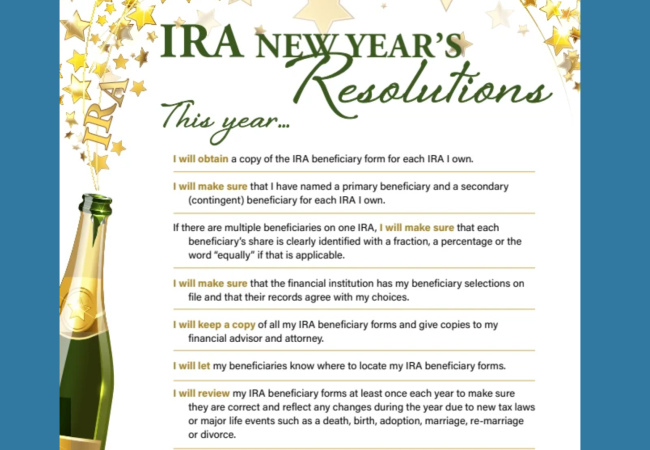
- Are your beneficiary designations still accurate?
- Has market volatility changed your investment risk exposure?
- Have you withheld enough in taxes or paid enough estimated tax to avoid penalties?
- Are your estate documents and gifting strategy still aligned with your goals?
These questions are especially important for families with significant retirement assets, taxable investment accounts, inherited IRAs, closely held business interests, or complex estate planning needs.
Have You Had Any Major Life Events in 2026?
Life events often create planning needs that are easy to overlook. A financial plan that made sense in January may need meaningful updates by December.
You should review your plan if you experienced any of the following:
- Birth, death, marriage, divorce, remarriage, or illness
- Began collecting Social Security benefits
- Layoff, retirement, job change, or new employment
- A child’s marriage or divorce
- An inheritance or significant gift received
- Creation of a trust
- Move, change of residence, or home sale
- Change of IRA custodian or retirement plan custodian
- Roth conversion
Each of these events can affect your tax picture, estate plan, cash flow, insurance needs, beneficiary designations, and investment strategy. For example, selling a home may create tax considerations. Starting Social Security may affect retirement income planning. Receiving an inheritance may require new investment, estate, or tax decisions. A divorce, remarriage, or death in the family may make beneficiary updates urgent.
Year-end is a natural time to make sure your financial plan reflects your actual life, not last year’s assumptions.
What Retirement Milestone Ages Should You Know?
Several retirement planning rules are tied to specific ages. Missing a deadline or misunderstanding an age-based rule can lead to unnecessary taxes, penalties, or lost planning opportunities.
| Age | Planning Consideration |
|---|---|
| 50 | Catch-up contributions may be available for certain retirement plans and IRAs. |
| 50, or 25 years of service if earlier | Certain public safety employees may qualify for an exception to the 10% early distribution penalty from employer plans. |
| 55 | Some workers may qualify for a plan-based exception to the 10% early withdrawal penalty after separating from service. |
| 59 1/2 | Retirement account withdrawals generally become free from the 10% early withdrawal penalty. |
| 70 1/2 | Qualified charitable distributions from IRAs become available. |
| 73 | Required minimum distributions generally begin for many retirees under current rules. |
| 75 | Certain 403(b) rules and exceptions may apply depending on account type and circumstances. |
These milestone ages should not be viewed in isolation. They should be integrated into your broader retirement income plan. The right move depends on your tax bracket, cash flow needs, investment allocation, charitable goals, health, longevity assumptions, and estate plan.
Should You Consider a Roth Conversion Before Year-End?
A Roth conversion allows you to move money from a pre-tax retirement account into a Roth IRA. The converted amount is generally taxable in the year of conversion, but qualified Roth IRA withdrawals may be tax-free in the future.
Year-end is an important time to evaluate Roth conversions because the transaction must generally be completed by December 31 to count for the current tax year.
A Roth conversion may be worth reviewing if:
- You are in a lower-than-usual tax year.
- You recently retired and have not yet started RMDs.
- Your portfolio declined and you can convert assets at a temporarily lower value.
- You want to reduce future RMDs.
- You are planning for a surviving spouse who may later file as a single taxpayer.
- You want to leave more tax-flexible assets to heirs.
- You expect tax rates to rise in the future.
However, Roth conversions are not automatically beneficial. They can increase taxable income, affect Medicare income-related monthly adjustment amounts, reduce eligibility for certain tax benefits, or push you into a higher bracket. The decision should be modeled before acting.
For high-income families and retirees with significant IRA balances, Roth conversion planning is one of the most important year-end tax planning conversations to have.
Do You Need to Take a Required Minimum Distribution?
If you are required to take an RMD for 2026, it is important to confirm the amount, the deadline, and which accounts are subject to the rule. Missing an RMD can result in penalties, though the penalty may be reduced if corrected in a timely manner.
RMD planning is especially important if you have:
- Traditional IRAs
- SEP IRAs or SIMPLE IRAs
- Employer retirement plans
- Inherited IRAs
- Multiple retirement accounts
- Recently changed custodians
- Rolled funds between accounts
- A spouse or beneficiary who inherited retirement assets
RMDs are not just compliance items. They can affect your tax bracket, Social Security taxation, Medicare premiums, charitable giving plan, and portfolio withdrawal strategy.
If you are still working and participate in a current employer plan, the still-working exception may apply in certain situations. Some retirees may consider rolling IRA funds into a company plan where the still-working exception applies before year-end to avoid taking RMDs on those funds the following year. This strategy requires careful review of plan rules, tax consequences, investment options, and timing.
How Can Qualified Charitable Distributions Help?
A qualified charitable distribution, or QCD, allows eligible IRA owners age 70 1/2 or older to transfer funds directly from an IRA to a qualified charity. A QCD can satisfy all or part of an RMD while excluding the donated amount from taxable income, subject to IRS rules and annual limits.
QCDs may be useful if you:
- Are charitably inclined
- Do not itemize deductions
- Want to reduce adjusted gross income
- Need to satisfy an RMD
- Want to give directly from an IRA instead of from a taxable account
- Are managing Medicare premium thresholds or other income-sensitive tax issues
The key is that the funds generally must move directly from the IRA custodian to the qualified charity. Taking a distribution personally and then writing a check to charity does not create the same result.
If charitable giving is part of your financial plan, QCDs should be reviewed before year-end as part of your broader tax and retirement income strategy.
Are You Withholding Enough for Taxes?
Year-end is a good time to check whether enough money has been withheld or paid through estimated tax payments. This is particularly important for retirees, business owners, executives with equity compensation, and families with investment income.
You may need a withholding review if you had:
- Roth conversions
- Capital gains
- Large bonuses
- Business income
- Stock option exercises
- Restricted stock vesting
- IRA distributions
- Social Security income
- Pension income
- Sale of property
- A major change in deductions
If you are short on withholding, one possible strategy is to withhold taxes from an IRA distribution before year-end. In some cases, taxpayers may replace those funds within 60 days, but this must be handled carefully because rollover rules, including the once-per-year IRA rollover rule, can create problems if misunderstood.
The larger point is this: do not wait until tax filing season to discover a shortfall. By then, your options may be more limited.
How Should Market Volatility Affect Your Year-End Review?
Investment management should be reviewed before year-end, especially after periods of market volatility. Volatility can create both risks and opportunities.
Your review should consider:
- Whether your portfolio is still aligned with your target allocation
- Whether your retirement income plan depends too heavily on market performance
- Whether tax-loss harvesting opportunities exist in taxable accounts
- Whether concentrated positions have become too large
- Whether cash reserves are adequate for upcoming withdrawals
- Whether your risk tolerance has changed
- Whether your current plan still supports a work-optional lifestyle
For retirees, portfolio risk is not just about account performance. It is about the timing of withdrawals, sequence-of-returns risk, inflation, taxes, and the ability to maintain income during difficult markets.
A year-end investment review should connect your portfolio to your financial plan, not simply compare returns to an index.
What Should You Discuss With Your Beneficiaries?
Beneficiary planning is one of the most overlooked parts of year-end financial planning. Retirement accounts, life insurance policies, annuities, and certain financial accounts often pass by beneficiary designation rather than through a will.
That means outdated beneficiary forms can create serious problems.
You may need to talk with beneficiaries or review documents related to:
- Post-death distribution options
- Required minimum distributions for inherited accounts
- Tax rules for inherited IRAs
- Properly titled inherited IRAs
- Spousal beneficiary options
- Estate tax return deadlines
- Net unrealized appreciation, or NUA
- Income in respect of a decedent, or IRD, deductions
- Trusts named as retirement account beneficiaries
Inherited IRA rules have become more complex in recent years, especially after the SECURE Act and subsequent IRS guidance. Beneficiaries may face distribution requirements, compressed timelines, or tax consequences they do not fully understand.
If an inherited IRA has multiple beneficiaries, it may be important to confirm whether the account should be split by the end of the year following the year of the original IRA owner’s death. This can help clarify administration and beneficiary-specific planning.
Should You Make Annual Exclusion Gifts Before December 31?
Estate planning is not only about what happens after death. It also includes lifetime gifting strategies that may reduce future estate exposure, support family members, or fund long-term goals.
Year-end is a good time to review whether annual exclusion gifts make sense. These gifts can help transfer wealth over time without using lifetime exemption amounts, if structured within IRS limits.
Annual gifting may be used to:
- Help children or grandchildren
- Fund education goals
- Support family wealth transfer
- Reduce future estate size
- Coordinate with trust planning
- Complement broader estate and tax strategies
Business owners and high-net-worth families should also review how gifts fit with succession planning, valuation issues, liquidity needs, and long-term family governance.
What Estate Planning Documents Should You Review?
Year-end is a practical time to review your estate plan and confirm that your documents still match your wishes.
Important items to review include:
- Wills
- Revocable living trusts
- Powers of attorney
- Medical directives
- Beneficiary designations
- Trust funding
- Asset titling
- Executor and trustee appointments
- Guardianship provisions
- Estate tax exposure
- Business succession documents
A common mistake is creating a trust but failing to retitle assets properly. Another is updating a will but forgetting retirement account beneficiaries. Estate planning should be coordinated with your financial accounts, insurance policies, and tax strategy.
For successful couples, executives, and business owners, estate planning should also account for liquidity, family communication, charitable intent, and the tax impact of transferring assets to heirs.
What Should Business Owners and Executives Review?
Business owners and executives often have more complex year-end planning needs than traditional W-2 employees. Their income may fluctuate, their tax exposure may be higher, and their wealth may be concentrated in business equity, stock compensation, or retirement plans.
Before year-end, business owners and executives should review:
- Business income and estimated taxes
- Retirement plan contributions
- Cash balance plan opportunities
- Entity structure
- Succession planning
- Buy-sell agreements
- Key person insurance
- Deferred compensation
- Equity compensation
- Concentrated stock positions
- Charitable giving strategies
- Estate liquidity
- Risk management needs
Executives should pay particular attention to equity compensation events, including restricted stock vesting, stock option exercises, employee stock purchase plans, and concentrated employer stock. Business owners should consider how company value, cash flow, tax planning, and personal retirement goals are connected.
A strong year-end plan should integrate both the business balance sheet and the personal financial plan.
How Do You Position Your Financial Plan for Success in 2027?
A successful transition into 2027 begins with clarity. You should understand where your income will come from, how your portfolio is positioned, what taxes may be due, whether your estate plan is current, and what risks could disrupt your goals.
Your year-end review should answer:
- What changed in 2026?
- What decisions must be made before December 31?
- What tax opportunities are available now?
- Is my retirement income plan still sustainable?
- Are my investments aligned with my goals and risk tolerance?
- Do my estate documents still reflect my wishes?
- Are my beneficiaries prepared and properly named?
- Is my charitable giving strategy tax-efficient?
- Do I have the right insurance and risk management plan?
- What should be adjusted before 2027 begins?
These questions help move year-end planning from a checklist exercise to a coordinated strategy.
Year-End Financial Planning Checklist for 2026
Use this checklist as a starting point before December 31:
- Review Roth conversion opportunities.
- Confirm all applicable RMDs have been taken.
- Consider qualified charitable distributions if you are eligible.
- Review tax withholding and estimated tax payments.
- Evaluate your portfolio after market volatility.
- Rebalance investments if needed.
- Review taxable accounts for tax-loss harvesting opportunities.
- Confirm beneficiary designations.
- Review inherited IRA rules and deadlines.
- Split inherited IRAs with multiple beneficiaries when appropriate.
- Discuss post-death distribution options with beneficiaries.
- Review estate documents and trust funding.
- Consider annual exclusion gifts.
- Evaluate Social Security and retirement income decisions.
- Review insurance and risk planning.
- Update your plan for life events.
- Coordinate business, tax, and retirement planning if you own a company.
- Prepare for 2027 cash flow and tax needs.
This checklist is not a substitute for personalized advice, but it can help identify the conversations you should have before year-end.
Frequently Asked Questions About Year-End Retirement Planning
What is year-end financial planning?
Year-end financial planning is the process of reviewing your retirement accounts, taxes, investments, estate plan, charitable giving, insurance, and cash flow before December 31. The purpose is to identify opportunities, meet deadlines, and position your plan for the year ahead.
Why is December 31 important for retirement planning?
December 31 is important because many tax and retirement planning actions must be completed by year-end. These may include Roth conversions, required minimum distributions, qualified charitable distributions, tax withholding decisions, and annual exclusion gifts.
Who should review Roth conversions before year-end?
Retirees, pre-retirees, high-income families, and individuals with large traditional IRA balances should review Roth conversions before year-end. A conversion may be useful in a lower-income year or before RMDs begin, but it should be modeled carefully because it can increase current taxable income.
What happens if I miss an RMD?
Missing an RMD may result in penalties, though the penalty may be reduced if corrected in a timely manner. If you believe you missed an RMD, you should address it promptly and consult a qualified tax or financial professional.
What is a qualified charitable distribution?
A qualified charitable distribution is a direct transfer from an IRA to a qualified charity by an eligible IRA owner age 70 1/2 or older. A QCD can satisfy part or all of an RMD while excluding the donated amount from taxable income, subject to IRS rules.
Why should I review beneficiaries before year-end?
Beneficiary designations often control who receives retirement accounts, life insurance, and certain financial assets. If they are outdated, they may override your broader estate planning wishes. Reviewing beneficiaries after major life events can help avoid unintended outcomes.
What life events should trigger a financial plan review?
Major life events such as birth, death, marriage, divorce, remarriage, illness, retirement, job change, inheritance, home sale, trust creation, or starting Social Security should trigger a financial plan review. These events can affect taxes, cash flow, estate planning, investments, and insurance needs.
How can business owners benefit from year-end planning?
Business owners can use year-end planning to review income, taxes, retirement plan contributions, entity structure, succession planning, risk management, and estate liquidity. Because business and personal finances are often closely connected, year-end planning can help align both.
What should I do now to prepare for 2027?
Begin by reviewing your financial plan, tax picture, investments, estate documents, beneficiaries, charitable giving, and any major changes from 2026. Then work with your advisory team to identify actions that should be completed before December 31.
Final Thoughts – RFG Wealth Advisory
Year-end planning is one of the most valuable opportunities to strengthen your financial plan before the next year begins. For families nearing retirement, retirees, business owners, executives, and successful couples, the decisions made before December 31 can influence taxes, income, investment strategy, estate planning, and long-term confidence.
A few proactive steps today can help you enter 2027 with greater clarity and confidence.
Financial Success Begins with an RFG Wealth Blueprint.
It takes Careful Planning and Expert Advice.
Contact one of our advisors at 940-464-4104, to discuss your year-end retirement planning questions. You may also schedule a free virtual consultation on our website,
RFG Wealth Advisory in Argyle, Texas, is an independent, fee-only Registered Investment Advisor firm that always puts our clients’ interests first. We have a transparent, simple fee structure that’s easy to understand. Call us Today!
Investment advice is offered through RFG Wealth Advisory, a Registered Investment Advisor.
Year-End Checklist 2026
Disclaimer
Financial Success Doesn’t Happen by Chance.
Contact lead advisor Chris Robinson with RFG Wealth Advisory in Argyle, Texas to discuss your questions.
RFG Wealth Advisory is an independent, fee-only Registered Investment Advisor firm in Argyle, Texas. At RFG Wealth, our fiduciary duty ensures your interests always come first, and we maintain a transparent fee structure for your peace of mind. Contact us today!
Investment advice is offered through RFG Wealth Advisory, a Registered Investment Advisor.
Schedule a Virtual Consultation
Chris Robinson is the managing partner and founder of RFG Wealth Advisory, which he founded in 1995. He is a current resident of Argyle and native of Denton, Texas.